Total Pageviews

Friday, 17 February 2012

Demographic research and planning

A core factor to planning and creating a Soap marketing campaign is knowing who to target your product to and why - your core demographic.
While we were planning, there were many different ideas to cater to multiple demographics, such as a simple Soap to target the normal audience such as EastEnders, which is watched predominantly by women ranging by age from an average of 16, to around 40 years. However, Soaps like EastEnders are of such a high profile that anything that could be considered taboo, or simply a bit of insensitive writing could lead to a massive controversy, and therefore they need to be very careful in what issues they write about in their show.
We decided that our Soap would want to deal with controversial and contemporary issues like youth drug addictions, whilst also catering to other factors like trying to get the girl. Therefore, we decided our demographic audience should be similar to that of teen Soap Hollyoaks, as they have a demographic of around 14 - 24 year old audiences from each gender.
This type of audience was, in my opinion, easier to write engaging stories for to put in our Soap trailer, as primarily, as I, and my team are from that age group, we would understand the issues that affect teens' daily lives more than we would understand daily issues for adults, such as bills. In addition to this, the cast to Hollyoaks is comprised mainly of younger people, as opposed to EastEnders or Coronation Street, as the young cast members in Hollyoaks allow the viewers to relate to their problems, as they will also be of a similar age.
The Hollyoaks cast

Therefore, this also allowed us to plan our filming much more efficiently, as we didn't need to plan our times to allow for multiple adults to make it to the filming. Instead, by having us and a few friends appear as the main cast, we were able to complete our filming within our set time.
Having our demographic similar to Hollyoak's was also good for our planning, as BBC One does not have a Soap to cater to the teen demographic, and so it also makes sense to have our Soap hosted on BBC. The demographic also allowed us to plan much faster also, because, as mentioned, many of the factors that affect the lives of the characters will have also affected us at some point, and so we would be able to apply our experience to the writing, thus making it much more believable.

Wednesday, 8 February 2012

Soap magazine covers

Once we had analysed magazine covers at the beginning of the year, we already had a firm knowledge of what a magazine cover consists of - thereby allowing us to simply change our previous copies from earlier to make our second ancillary text.
As described in our earlier analysis - magazines have many conventions similar to the posters or the trailers themselves. Primarily, many of the conventions have no relevence to the actual soap, but serve more practical purposes, such as the overall design of the poster - consisting of a blue background, red background around the title and a very compact layout of all of the information, as shown by this example below:
As of such, we needed to create a similar magazine with all of the designs, including the pugs, prices, main head image and taglines, and many more:

The first thing we are drawn to is the mast head, as it is backed by blue - red's compliment. In addition to this, the main dominant image overlaps with the mast head drawing the attention to the image next, which takes up the majority of the page. This is a convention common among all other magazines, as it helps sells multiple copies and also gives news into new soaps or plot progressions into already established soaps, as shown in the example image.

Monday, 6 February 2012

Soap Posters

After viewing and analysing various Soap posters, we had to create our own posters to advertise with the magazine article and the Soap trailer itself, thus creating a synergy between each of the marketing products.
When designing the poster, I went through several drafts, experimenting with the characters, the positions and the settings, attempting to replicate the style of the neighbours  poster.
The first draft I made featured the characters in their original positions from the end of the trailer, but I figured it would be too similar to the ending itself and therefore would look uncreative, or lacking somehow.
The next image I used was a picture from the town center, but the character's positions were wrong, as half of us were overlapping buildings, and the others in the road, with the sign was in the middle of the street. Therefore, I decided to create seperate layers for each of the characters to allow me to move them properly. Finally once I created a suiable position, I found that the background wasn't quite appropriate, so eventually I settled with the picture from our location study, with the street and pub.


I created this poster using a copy of Photoshop, taking ideas from several other posters involved in my research, such as Neighbours. I also used some of my own ideas to create a better mise-en-scene, such as removing the characters from their original pose and settings and placing them on a different street. I also used two text layers on avenue to create a 3D drop shadow effect, using red to imply danger and to also grab the attention of the viewers, as it stands out from the very grey tone of the poster.

Wednesday, 1 February 2012

Soap trailer first draft

After we managed to gather enough examples of marketing campaigns for Soaps, we were able to film and edit ours together.
Once we knew what demographic we were going to pursue, we decided a darker mise-en-scene and low key tune would fit the trailer perfectly, and through a case study, we also knew that BBC has never had a show that quite promotes itself to teenagers, thereby providing us with a window of opportunity to create a plausible trailer.

Soap Opera Posters

Marketing is crucial to spreading the word of  a new soap, and few marketing campaigns are as cost effective as posters. Despite this however, very few soaps use poster advertising, using instead TV marketing and word of mouth. However, some soaps do utilise poster marketing, and through the analysis of a few examples, we will be able to create a realistic soap poster for our coursework.
The first poster comes from Australian Soap Opera, Neighbours. Similar to any other soap, the main feature of the show is the cast whom are all present. The main feature of any soap is the cast and characters, so therefore the main image on any soap poster should be the cast and crew. However, the setting always plays an important role so the characters should always be shown in the area that the soap will mostly be shown, which is in this case, a neighbourhood. In addition to this, the writing advertising the show is written on signposts, giving the poster a more realistic appearance for the show's aesthetic.

In addition to these factors, the poster's lighting and mise-en-scene conveys the show as a show with a happier tone, and therefore I can understand the lighting is crucial for conveying the atmosphere for the show.

However, with more established and well known soaps, a simple image can represent the synergy, and as a result, there aren't many soap posters to analyse. Therefore, if a soap that is already established advertises through posters or billboards, it will do so through a simple synergy, such as the EastEnders intro picture:
As of such, if we are able to create a form of synergy, we'll also be able to create a plausible series of adverts to synergise between all of the promotions.

Tuesday, 13 December 2011

Media Theories: Cultivation Theory

Cultivation theory:This theory suggests that as audiences view increasing numbers of films and TV shows, they gradually develop certain views about the world, some of which are false.
Strengths: This particular approach draws the focus on the fact that audience members develop large quantities of information about the world from the media that they view. In addition, it also recognises the increasing influence the media has on day to day life.
Weaknesses: This approach often comes under the criticism that by judging people's perceptions on the world on the media they use, views such as crimewatch feeds perceptions that Britain is overrun with crime and that the rate is growing, while not contemplating actual facts or evidence.
Notable example(s): War of the worlds, this was during the infamous radio broadcast of 1938 in which people actually mistook the broadcast as a news bulliten, causing mass hysteria and panic.
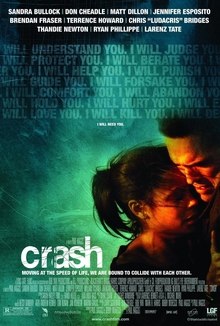
Another exmple is the film Crash, which made people believe that people often cause crashes deliberately to get a natural high.
The final example is the mainstream news media, as they always focus on the shocking stories to get the views, however this often feeds the perception that the world is a bad place where everyone is out to get you, where in fact, it is only a minority.

Monday, 12 December 2011

Media Theories: Copycat Theory

Copycat theory:
This theory suggests that audiences will copy what they see in the media. However, this is not so much of a theory as opposed to an assumption that has been blown out of contrast by the press.
Strengths: The main power and influence of this theory is how it psychologically prays off the fears and concerns of parents as well as many independent commissions other than the BBFC, and engages their parents to more actively monitor the media that they use. This not only covers movies, but also video games, especially with underage gaming on the rise, with games such as Modern Warfare 2 being predominantly played by young people as an example.
Weaknesses: The main weakness is the opinion of the people regulating their children, as the preconception of danger varies from person to person, so one person's horror movie is another's comedy. Additionally, while short term effects of the media are easily monitored, the long term are not so easily monitored, and therefore the theory cannot be proven correct. Thus leading to moral panic where people suspect that rap music can lead to gun violence for example.
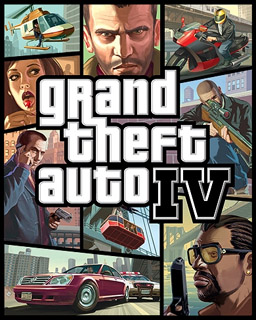
Notable example(s): The most notable example as discussed earlier is the Bulger murder case. Additionally there are multiple cases of children with short tempers due to constant exposure to competitive and mature gaming, examples being Call of Duty and Grand Theft Auto.